Can you Trust the Angols?

I was once on an intercity bus sitting behind two Polish men. One of them was talking on his mobile phone, loudly discussing a business deal in English.

At the end of the conversation, he said have a nice day and hung up, switched to Polish and started talking to his companion. He described the deal and how much he would earn, and sounded very pleased with the arrangement. But his companion, who was older…and apparently wiser, wasn’t convinced. He turned to his companion and said in a calm, quiet voice:

‘Just remember… the Angol is not your friend!’

I was shocked. It was a generalization. He meant all Angols.

Being an Angol* myself, I don’t believe that British people are faultless, but on the whole, I think we’re trustworthy.

Aren’t we?

So why did this Pole say ‘remember, the Angol is not your friend’? Why did lean forward as if he was giving his companion a message that would protect him? Why did he use a hushed tone of voice that suggested he was talking about a dangerous alien race? Why would he suggest that Angols only pretend to be your friend?

Well, there is one thing about British people that doesn’t inspire trust – our communication style.

While Poles speak directly and express their opinions honestly, Brits speak very indirectly and hide their opinions in vague language. From experience I know that this can be confusing and frustrating for Poles.

I remember a Polish colleague once asked me ‘what does it mean when a British person says ‘I’m not impressed’? If you could put it on a scale of 1 to 10, with 1 meaning it’s awful and 10 meaning it’s fantastic. Would it be a 7 or a 2?’

Oh, that would be a 2’ I told him. ‘It’s like saying that something is ‘very bad’.

Why didn’t he just say that!’ he replied, clearly frustrated.

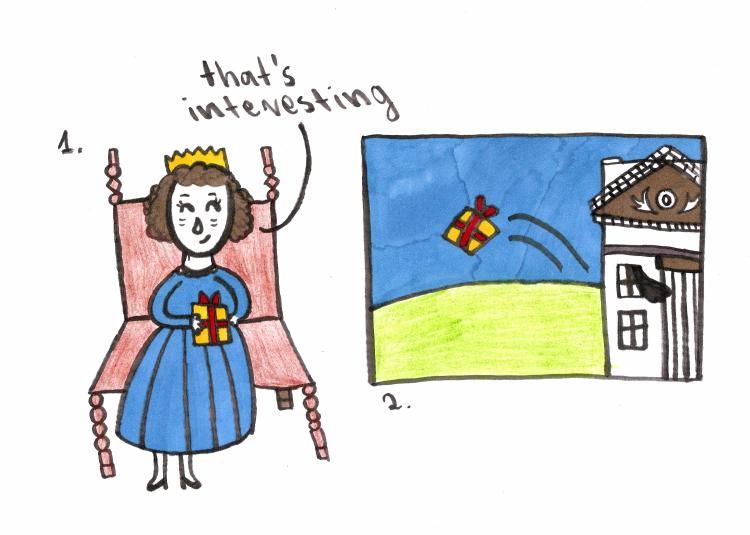
There are numerous articles translating expressions used by British people into normal language. For instance, when a British person says I agree up to a point, it actually means that they disagree with you. Or when they say that something could be better, it means that it’s very poor. And if you cook a meal and serve it to a British person who says that it tastes interesting…just throw away that recipe!
królowa

In his book The Right Mind*², the psychologist Robert Orstein tells a story of an American businessman visiting the UK. The businessman had just given a presentation to a group of British directors. After the presentation, one of the British directors stood up and said the following:

‘I’m not sure I, or anyone here, will agree completely with absolutely everything the speaker has said, but we thank him for his trouble in coming here to attempt to make a difficult idea possibly more clear to us.’

The Brits in the audience were shocked, but the American kept smiling. He didn’t get it.

In British English, the above sentence basically means ‘everything this guy said is bullshit.’ But British people rarely give feedback in such direct language. Foreigners (Americans included) find it very difficult to understand a British person when they are giving feedback in such an indirect style.

Growing up in the UK, you just naturally learn to communicate this way. It wasn’t until I lived abroad that I realised how confusing this can be.

So, can you trust the Angols? Well, I have to admit that the British style of giving feedback raises this very question. If we don’t say what we mean…explicitly and honestly…then how can you trust us? Why wouldn’t you believe that we’re trying to deceive you?

To defend the Angols, I’d like to point out that we’re just trying to be polite. In the UK it’s considered rude to express your opinions too directly.

So if an Angol doesn’t share his or her opinions very directly…if they confuse you with very opaque feedback…don’t worry, he or she is just trying to be polite

…because they do want to be your friend!


*I am from Scotland, but understand that the Polish term Angol refers to people from Britain and not just England.

*²p102, The Right Mind: Making Sense of the Hemispheres, Robert Ornstein, Hardcore Brace & Company 1997
The Polish Butcher

On a warm July evening we sat in the garden of a friend’s summer house. In the growing darkness the only illumination was a lamp on the wall of the cottage, which acted as a magnet for insects from the local forest. Moths and flies flew in circles while beetles and bugs crawled up the cottage wall towards the source of light.

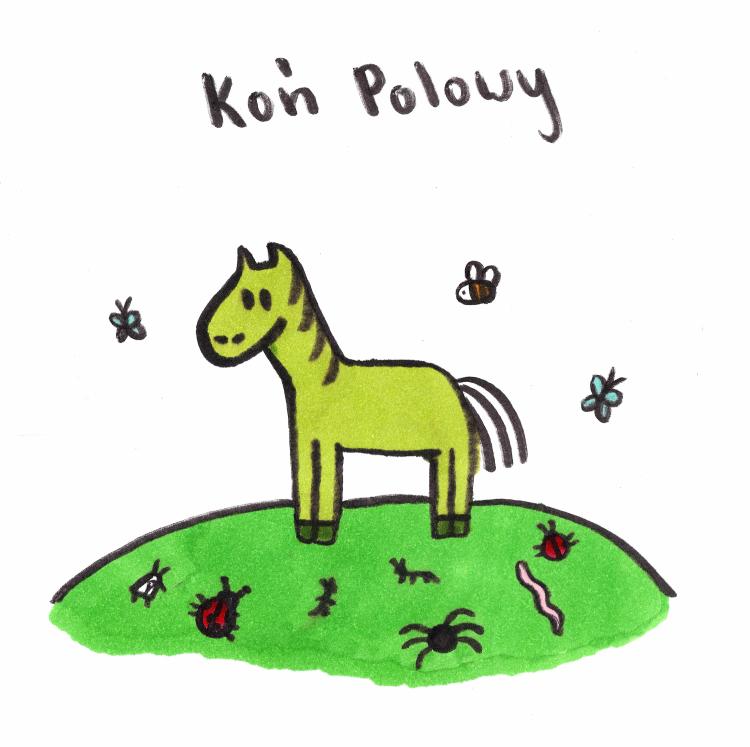
I noticed something huge…slowly making it’s way up the wall…and now it was only a few centimetres from my friend’s head. I had to warn her.

Emm, Ola…uważaj bo blisko twoja głowa jest ogromny koń polowy.

(Look out Ola because there’s a huge field horse near your head).

She looked surprised, but turned around to see what I was referring to. Realising that it was only a harmless grasshopper, she started laughing, ‘Kon polowy!’ and the rest of the group started giggling too.

koń

In English we have an idiomatic expression to butcher a language, i.e. to cut it into pieces until there’s just a big mess. Well, I’ve been butchering Polish for years…changing the word order, inventing completely new expressions, combining words that shouldn’t be combined, adding sounds to the pronunciation of words and using expressions in the wrong context. What’s left after this butchery is a bit of a dog’s dinner. Honestly, it’s never been my goal to speak perfect Polish, but to have fun interacting with Poles. I usually give them a good laugh.

Of course, when you want to warn someone that a huge bug is about to jump on their face, it’s useful to use the right vocabulary. Saying that a horse (koń) is climbing the wall instead of a grasshopper (konik polny) helps to get the listener’s attention…even if it doesn’t convey the correct level of danger.

But these mistakes are logical. I mean, I knew that the Polish word for grasshopper was related to a horse! And it was such a big grasshopper than the diminutive konik just didn’t do it justice. So, there’ some rational behind my butchery…I hope.

For instance, when someone says dziękuję, I always respond with proszuję. I prefer it when one expression mirrors the other.

Or with the word order in the sentence nic się nie stało… even when 55,000 Polish football fans are singing this in the National Stadium, I still can’t get the word order right. Switching the order of nie and się, I always say nic nie się stało. But, Polish word order is supposed to be flexible, isn’t it? … so don’t blame me if I take liberties.

Then there are words into which I add additional sounds…they just sound better to my ears. Most often this involves adding the letter z into words connected to animals:

  • pajęczy-z-na (pajęczyna / spider’s web)
  • ro-z-pucha (ropucha / toad)

Finally, Polish has too many comparative expressions and I only have enough free memory space for one…which happens to be the shortest and simplest: jak bela (as a bale) which is used in the expression pijany jak bela (drunk as a bale)

Now I compare everything to a bale:

  • szybki jak bela (fast as a bale)
  • zimno jak bela (cold as a bale)
  • lubić kogoś jak bela (to like someone as much as a bale)

and just assume that the listener understands that I mean ‘a lot’ or ‘very’.

So I butcher Polish…which works for me… but that’s not good news for those around me.

I live in Poland and interact in Polish around 90% of the time. The consequence of this is that my Polish skills improve, while the Polish of those I interact with gets worse!

Those friends from the summer house also use the expression kon polowy from time to time.

And my wife got so used to jak bela that she started to use it herself. Now we both use jak bela. It’s a nice shortcut, but, technically, her Polish is now worse.

So I invite you to start using jak bela too.

I wait for the day when it spreads out into society and I hear it in everyday situations. For instance, when I visit the doctor and he or she says, after completing the medical examination, that I’m zdrowy jak bela or when I’m watching football on TV and the commentator says Rasiak walczył jak bela.

I’ll be able to laugh and say…hah!…I started that…that’s my creative butchery!

Sign Language

I was once sitting at a hot desk next to a door that was the exit/entrance to a large open-space office. On that particular day, the door was out of order. A sign saying awaria/out of order was clearly visible in the middle of the door. I spent eight hours sitting there and noted a curious cultural difference.

The ‘foreigners’, i.e. Brits, Americans and other nationalities that approached the door, stopped around two metres away when they saw the sign, turned and walked around the open space to the next door.

The Poles approached the door, paused two metres away when they saw the sign, and then marched up to the door and turned the door handle. Discovering that the door was indeed out of order, they walked around the open space to the next door.

I asked a guy I knew why he had tried the door handle.

Maybe they repaired the door and forgot to take the sign down,’ he replied.

I didn’t think of that.’

Or maybe the carpet is getting worn and they want us to use the other door.

You think?

This is Poland,’ he explained, ‘just because they put up a sign saying ‘awaria’ doesn’t necessarily mean that it’s out of order.’

And that’s just it.

A dictionary can give you the definition of a word… but experience tells you what it means to people!

door

And that experience was a perfect illustration of Poles’ attitude towards authorities…don’t trust everything they tell you…especially not at first. If the building administrator puts up a sign saying that a door is out of order, then it’s worth verifying that fact yourself. They might have other motives!

And this is especially true in public administration. In a typical urząd you need to fight to get any information at all, and when you do get some answers, one clerk will tell you one thing, while another clerk will tell you something completely different. To achieve your goal, you need to gather information, but the quality of information you get from authorities in Poland is often poor and contradictory. It’s no wonder that Poles want to check for themselves!

So forget the dictionary definition, if I see an awaria sign on a lift, door or ticket machine, I don’t walk away immediately.

In Poland it’s always worth checking to see if the door is working just fine. You might just get where you’re going.

HodgePodż

It’s hard work learning Polish.

At school I had learned German, which was easier because a lot of the vocabulary is similar to English. For instance, I didn’t have to learn the words for buch, finden or fussball – it’s like I got those ones for free. In Polish, however, the equivalent words are książka, odnaleźć and piłka nożna! For an English speaker there are no freebies when you learn Polish. You have to work hard for every word.

And that’s usually one advantage of having English as your mother tongue. Over the past 1500 years English has evolved or borrowed from so many different languages that you can expect some freebies when you’re learning any foreign tongue…except for Polish.

There’s an English expression hodgepodge (originally borrowed from French) which means a confused mixture of different things. And that’s how I’d describe the English language.

English started as a Germanic language, adopted Norse grammatical structures, then borrowed loads of words from Latin and French. During colonial times, it adopted words from various British colonies around the world: pyjamas (India), tomato (Aztec/Mexcio), and totem (Native American). Indeed, English has borrowed so many words from French that in Paris there’s a saying that English is a language for stupid French people.

But, returning to the challenge of learning Polish, I must say that first impressions can be deceptive. As you listen to Polish more and more, you start to hear English words in Polish sentences:

  • Dżinsy czy szorty?  (jeans or shorts)
  • On jest prawdziwym dżentelmenem  (he’s a real gentleman)
  • To jest mityng lekkoatletyczny  (it’s an athletics meeting)

And when an English-speaker learns how to spell particular sounds in Polish, then suddenly the English language magically reappears:

  • Dżungla…wait a second…is that the place where snakes and monkeys live?
  • I’m supposed to do what? Click on ‘lajkować’…ah… you mean the thumbs-up symbol.
  • A guy who rides a horse is a dżokej? Łał.

Previously I complained that there are no freebies when learning Polish…but that’s changing…and fast! Polish is acquiring English words at such a huge rate that in future a learner will only need to learn a few spelling rules to master the language!

Now I understand why Polish has borrowed words connected to modern technology – fejsbuk, hejter, smartfon – they’re new to English as well. But there are some words that Polish has borrowed from English that surprise me. Why did you borrow flirt, fair or weekend? Aren’t there Polish words for these?

hybryda_jpg

Whatever the reason, like the English language, Polish is becoming a hodgepodge…or should that be a hodżpodż?

So, to add to the hodżpodż, I offer you the following hybrid verb, a combination of the Polish verb przesadzać and the English verb to exaggerate.

przesadzerate, verb – when a Pole pessimistically predicts the death of the Polish language due to the influx of English words

Władysław: Język polski umiera

Rajan: Don’t przesadzerate!

Begging for Bilets

I remember the first time I tried to buy a ticket for public transport in Poland. I knew that you got them from those Ruch kiosks, and I knew what to say – I had the expression ‘bilet poproszę‘ (one ticket please) written on a scrap of paper in my pocket. There was a couple of minutes until the next bus. All set. What could possibly go wrong?

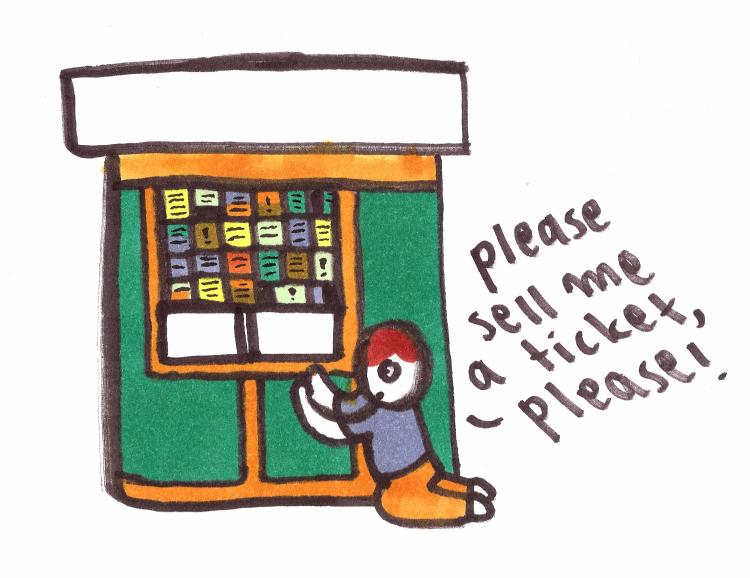
I approached the kiosk and the first thing I noticed was that the only opening was a small window at waist height. To communicate with the person inside, I had to bend forwards and turn my head sideways. Immediately I was in a submissive position, bent over like a servant as if I were begging at the feet of a king.

Through the small window, I could see someone inside. Although I couldn’t see his face, I could see the torso and hands of a man, who was sitting next to a heater and reading a magazine. It felt like I was interrupting.

kiosk

I cleared my throat and reading from my scrap of paper, I said ‘bilet poproszę

Instantly, the man inside the kiosk said ‘nie ma‘.

It was at this moment that I froze.

Coming from the UK, I am used to a high-level of politeness in customer service. If something is not available, then the shop assistant will say something like ‘sorry we don’t have any tickets, but if you go 100 yards down the street, you can find a shop that sells them.’ In this way, even if a shop assistant can’t help you, they at least pretend to.

What’s more, the shop assistant will usually respond by apologising and give the impression of regretting the fact that they can’t provide a customer with what they need. In the tone of their voice, you’ll also be able to hear a sense of empathy as if they were stepping into your shoes and feeling the same disappointment as the customer.

So I paused…waiting for the man in the kiosk to let me know where else I could get a ticket or when they would be back in stock. Anything to help me on my way.

But the guy in the kiosk said nothing…he just continued reading the magazine.

And the way he had said ‘nie ma‘… responding even before I’d finished saying ‘poproszę’. His response lasted a fraction of a second and it didn’t seem that he was going to put any more effort into the interaction. There was no empathy in his tone, no sense of regret. It was a simple statement of fact – there weren’t any tickets.

Yet my brain was so used to a familiar cultural pattern that I didn’t know what to do when the pattern was broken. I was stuck for a moment in a state of disbelief.

The bus arrived, some passengers got out, other got on. The bus departed.

But I was still at the kiosk, frozen in a bent-over position …slowly realising that I wasn’t going to get an apology, empathy, advice….and definitely not a ticket.

Reflections

  • I laughed when I later found out that ‘Ruch‘ means ‘movement‘…I associated it with being stuck and going nowhere.
  • I once wondered what it would be like if Ruch ran a project to train kiosk workers in customer service. Would the service be transformed? Probably not. Instead of a two-word reply, he’d just try and sell me stuff I didn’t need…only more politely.
  • Actually, a kiosk is a good place for a beginner to test their language skills in real world. You get a short, clear response to your questions – kiosk workers don’t tend to bamboozle you with long sentences or complex expressions.
  • Ruch has modernised their kiosks and in the most modern ones you can actually make eye contact with the person inside…without bending over. Opposite my apartment we even have a Ruchsalon handlowy‘…that’s what they call a kiosk you can walk three paces into.
  • Since that day I’ve had quite a few experiences in Poland in which the level of customer service I received didn’t live up to my expectations. I must say that I prefer the British style of interacting with customers. Customer service in the UK is polite and empathetic – very much focused on the relationship with the customer…but sometimes it’s also false. ‘Sorry, we don’t have any tickets, maybe if you try up the street?,’ is a just a polite way of saying ‘no, go somewhere else‘.
  • I hear lots of complaints about the quality of customer service in Poland, but there is one thing about it that I do appreciate…it’s honest. If there aren’t any tickets, then they’ll tell you that. No sugarcoating, no sales pitch, no pretense.

Nie ma.

Idioms for Dinner

Idioms can be confusing, especially if you understand the words literally. Often I jump to conclusions about what a Polish idiom means and end up getting it completely wrong.

The worst thing is… I tend to remember the wrong meaning more vividly than the actual one.

So here’s a small sample of Polish idioms I’ve misunderstood – all connected with food:

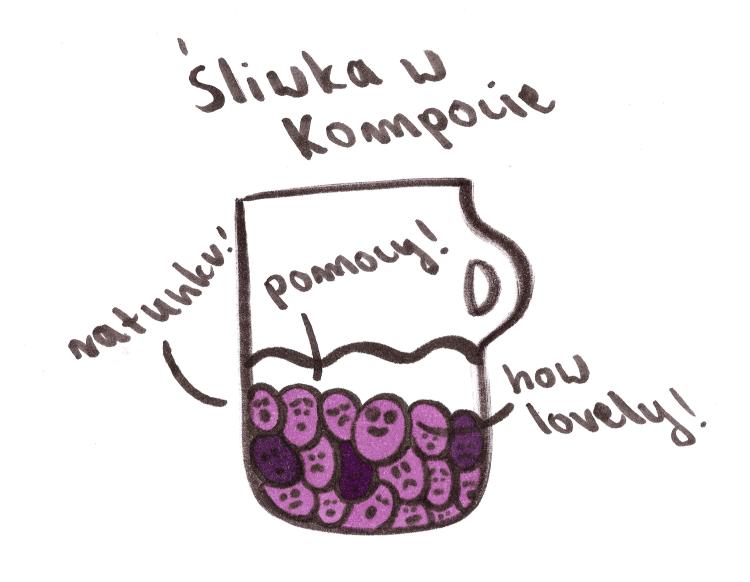
1. Wpaść jak Śliwka w Kompot

This is translated as ‘to get into hot water‘ and I like it because it’s so Polish. In the UK, we don’t have kompot and plums aren’t a popular fruit, so to understand this idiom you need to come to Poland and take a look at a jug of kompot.

śliwki

Do the plums in a kompot jug look like they are in trouble? When I first came across this idiom I assumed, incorrectly, that it meant to be in a comfortable, familiar situation. Shouldn’t plums feel at home in a jug of kompot? After all, the plums are with friends! What’s more, I don’t think a plum in kompot is in that much danger. A lot of the fruit gets left behind once the kompot is drunk. I’d rather be a plum in kompot than a plum in jam or in bigos.

2. Jak Flaki z Olejem

Literally, this means ‘as tripe with oil‘. I had been offered flaki (tripe) many times in Poland (which I politely refused) before I came across this idiom. So I associated flaki with something very ugly…even a little exotic…and frankly disgusting.

So when I came across the idiom, I assumed it meant either disgusting or ugly. In English we have an expression that something looks like a ‘dog’s dinner‘, meaning that it’s a mess or really horrible to look at. I figured flaki z olejem meant the same.

I was surprised when I later saw the idiom in its full version ‘nudny jak flaki z olejem‘ which is best translated by the English idiom: ‘dull as ditch water’.

Now I feel sorry for all those Poles who had to eat tripe for every meal so that it became the definition of boredom!

3. Bułka z Masłem

I first heard this idiom when listening to a shanty in the port of Sztynort in Mazury. Maybe it was the context that fooled me because the shanty was about a sailor who survived a storm, reached Sztynort and ate a bread roll with butter. So I assumed its meaning was connected to safety or stability. You know, the kind of thing a fireman would say after it turns out that there’s no bomb in the building. ‘It’s okay, just a false alarm, everything is safe and we can all go home and eat a bread roll with butter‘.

Of course, bułka z masłem actually means that something is ‘easy/simple‘. I guess it’s pretty straightforward to spread butter on a roll, but it’s not so easy to understand why it was included in that shanty.

Curiously, the English language also uses food idioms to describe something that’s easy:

  • a piece of cake (UK)
  • as easy as pie (US)

…except both are a bit more posh than the Polish bułka.

In Conclusion

The Polish language is full of great food idioms. Indeed, you could eat a three-course meal consisting of idiomatic foods only:

Client: What do you recommend?

Waiter: Well for a starter, I recommend flaki z olejem.

Client: No, that’s a bit boring. Anything else?

Waiter: Perhaps…dwa grzyby w barszczu?

Client: Barszcz is fine, but I’ll just have one grzyb..save some room for desert.

Waiter: As you wish. For the main course, we have some niezły bigos.

Client: Perfect, I’ll have the bigos. Can you serve it with bread and butter?

Waiter: Dla nas to jest bułka z masłem.

Client: I’d prefer bread if you have it.

Waiter: And for desert, the icing on the cake, wisienka na torcie.

Client: Delicious.

Waiter: Anything to drink?

Client: Kompot…with plums?

Waiter: Certainly…and I assure you that no plums were harmed in the making of the kompot.

Muchomore, Mucholess

One regret I have about living in Poland is that my Polish wife doesn’t like mushroom-picking and has never taken me on a trip to the forest with a basket. One of the rites of passage for foreigners into Polish culture is the first time they are invited to go mushroom-picking. My wife has failed to give me this basic initiation …and education.

As far as mushrooms are concerned, my mental basket is empty.

In the UK we don’t have many forests left. That’s why, we don’t have much affection for mushrooms despite the wet climate. To us, mushrooms are small, white buttons that you buy in plastic-wrapped packs in Tesco. They are grown in darkened warehouses and don’t have any taste. Indeed, the only people who actually go mushroom-picking in the UK are desperate students looking for a psychedelic experience.

Consequently, English speakers only use one word for the fungi that grows in the woods – mushroom. If you want to define them more precisely, then we borrow from French – chanterelle, champingon etc.

In Poland, however, mushrooms are a passion and their appearance marks a time of the year. Not only are they a delicious food, but they are a hobby, a source of income and an activity that unites the whole family. The entire population can get involved – you just need to get up early enough and know where to look.

While English speakers only use one generic expression, Polish has the generic name grzyby, as well as a different name for each type of mushroom – borowik/prawdziwek, rydz, kurka, kania, pieczarka, maślak, gąska, koźlarz, podgrzybek, zajączek. And all Poles know the difference between a kurka and a gąska from 100 metres away through a dark, damp forest.

In English, we do have a specific word for the poisonous mushroom known in Polish as muchomor. It’s called a toadstool, i.e. a chair that a toad can sit on. This makes it sound quite harmless… even cute. At least in Polish, they give cute names to edible mushrooms – kurka (little chicken), gąska (little goose) and zajączek (little hare), while giving aggressive names to poisonous mushrooms – szatan (satan), and muchomor (fly-killer). Now that’s a clear message!

grzyby

Whenever I ask Poles how they acquired this skill, the answer is pretty much the same:

Me: How did you learn all this?

Pole: When I was a child my grandma (or grandpa) took me to the woods to pick mushrooms. Didn’t your grandma take you?

Me: No.

Pole: Why not?

Me: Well, we don’t have forests. We cut down all the trees centuries ago to build ships.

Pole: That’s a shame.

Me: Yes, we gained an empire, but we lost the opportunity to go mushroom-picking.

Pole: There must be some forests left.

Me: A few. But, in any case, my grandma wouldn’t know the difference between a mushroom and toadstool. If she had taken me mushroom-picking as a child, then I probably wouldn’t be here talking to you now.

I worry about the consequences of not learning this crucial Polish skill. I’ve tried to warn my wife – what if there’s another war and we have to live wild in the forest? Not knowing the difference between a szatan and a prawdziwek, I will probably be poisoned before the first shot is fired!

So far my arguments haven’t convinced her… I’m still hunting for mushrooms in Tesco.

The Princess and the Spider

Once when I was walking with a friend in Kraków, we climbed up Kopiec Kościuszki. From the top we could see Kopiec Piłsudskiego.

‘Does everyone who fought for Polish freedom get their own mound?’ I asked.

Almost,’ he laughed. ‘Kościuszko, Piłsudski, Wanda.’

Wanda?’

Yes, Wanda who didn’t want to marry the German.’

What?’

You know, she jumped into the river instead of marrying a German prince.’ my friend explained.

I had read some Polish history, so I knew who Kościuszko and Piłsudski were, but I had never heard of Wanda before. And when I heard about the legend…the Polish princess, the bad German, the heroic sacrifice…it reminded me of a Scottish legend.

The Scottish king, Robert the Bruce, and his army were defeated by the English. He hid in a cave, where he watched a spider trying to spin a web. Time after time, the spider would fall from the cave ceiling to the floor, only to crawl back up the cave wall and start again. This inspired Robert not to give up. He formed another army, defeated the English at Bannockburn and Scotland was an independent country for nearly 400 years thereafter. The legend teaches Scottish children that ‘if at first you don’t succeed, then ‘try, try again.’

Poles aren’t familiar with the legend of Robert the Bruce, but they all know the film Braveheart. I remember the first time I heard the film’s title in Polish:

Jacek: Do you like Fighting Heart?

Me: Fighting Heart? Is it a card game?

Jacek: No, the Scottish film. It won an Oscar. Freedoooom, you know?

Me: Oh, Braveheart.

Jacek: Yes!

Me: What’s it called in Polish?

Jacek: Waleczne Serce. It means Fighting Heart.

My friend, Jacek, confused the translation of waleczne (brave) with walczące (fighting), and his confusion make me realise what a silly title the film actually has in English.

Poles seem to love the film – there’s definitely some similarity between Scots fighting for their freedom from a dominant neighbour and Poles fighting for their freedom from dominant neighbours. And I must admit that the film is great PR for Scots. It portrays us as brave, passionate and romantic. I’ll take that.

Just like Wanda, the hero in the film, William Wallace, makes a heroic sacrifice and dies for the cause of freedom. Yet the film Braveheart was produced in Hollywood and, while it’s based on historic people and events, a lot of story was adapted or invented to make the film more appealing. The film is legend, not history.

So I’m waiting for a Hollywood version of the Wanda legend. Maybe it could be called ‘Braveheart 2‘ and Mel Gibson could direct it? I’d cast Emilia Clarke as Wanda (same costume as in GoT), Zac Efron as the German prince, and Sean Connery as king Krak. The soundtrack would be performed by Zakopower. Since historical facts can be ignored, we can assume that the Wawel dragon was still alive at this time and plays a prominent role.

The original Braveheart won five Oscars, so I’d expect this version to win even more.

wanda2

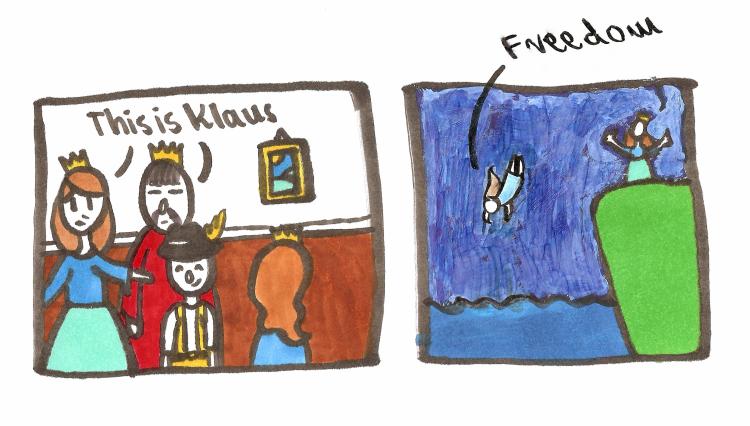
In Braveheart, William Wallace shouts ‘freedom’ just before he is executed by English soldiers, and if Hollywood made a version of the Wanda legend, I’m sure the final scene would show something similar – Wanda jumping into the air above the Vistula river and shouting ‘freedom‘ in English at the top of her voice.

Thankfully times have changed. When I, a foreigner, asked for her hand in marriage, my Polish wife didn’t even consider jumping into the Vistula river…well, if she did, she didn’t mention it.

Polish Idioms#1 – Cats

Idioms are mysterious…especially those in a foreign language. Why do they have this particular meaning? Where did they come from? Do people really use them?

In a way, idioms are like internet memes. At some point in history, someone created an expression that ‘went viral’ and became part of the language.

So I’ve decided to write some posts about my favourite Polish idioms – organized by category – to begin with…cats!

1. pierwsze koty za płoty

I first came across this idiom at work. Together with a colleague we were running a series of training sessions. After the first session had finished and the participants were leaving the room, my colleague said ‘pierwsze koty za płoty‘.

I could see that she was referring to the group of participants that were leaving the conference room. ‘Ah-hah,’ I thought, ‘we’re chasing the cats out of our garden. I wonder why? Maybe the cats were doing their business in the flower beds and we wanted to keep them away from the roses?” I assumed the idiom meant ‘to get rid of unwanted visitors’ like when it’s late and you want the party guests to leave so you can go to bed.

I later learned that the idiom actually means to complete the first step in a series of challenging tasks. And actually, in English we have a similar expression to describe a difficult task: it’s like herding cats.

2. kupować / kupić kota w worku

In English we have an idiom with the exact same meaning: ‘to buy a pig in a poke‘ (a poke is a bag or sack).

Despite using different animals, these two idioms are related. They both refer to a trick played in the middle ages in which a seller would sell what they claimed was a pig in a sack, but it was actually a cat. The buyer, if they didn’t check the contents first, would buy a cat, which is worth a lot less than a pig.

Incidentally, in English, we have another idiom – to let the cat out of the bag – which means to reveal hidden information / plans, and is directly related to the same trick. If you open the bag, reveal the cat, then you have exposed the trick. Curiously, this second cat idiom doesn’t seem to exist in Polish. Perhaps in Poland there’s better customer service and you simply return the kot and get a refund?

3. odwracać kota ogonem

I can visualise most idioms and imagine them in a scene (cats, fences, bags etc), but I just can’t picture this one.

I came across it in a comment posted under an interview with a politician. The commentator claimed that the politician had turned the cat around by its tail.

I checked the dictionary and discovered what it meant (twist everything around), but I couldn’t visualise how you would do it? Is the cat facing you or the listener? Do you turn the cat around sideways or flip it over like a hamburger? And how to avoid getting scratched?

When taking our cat to the vet, I struggle to get it into a cat carrier. How skillful do you need to be to turn the cat by its tail? Perhaps there is a YouTube video with ‘how to’ instructions?

I can understand how the first two idioms became part of the Polish language – they make sense – but this one? If it meant ‘doing something impossible‘ or ‘perform a miracle‘, then I could understand. But it describes a skill that someone can achieve. Wow!

4. kot po kupie

According to Katarzyna Mosiołek-Kłosińska*, there are 32 Polish idioms about cats and most of them portray cats as difficult or devious. Fortunately, the modern world appreciates cats much more – there are literally millions of cat pictures, videos and memes online. Indeed, a scientific study found that people who watch cat videos online feel more energetic and positive.

kot

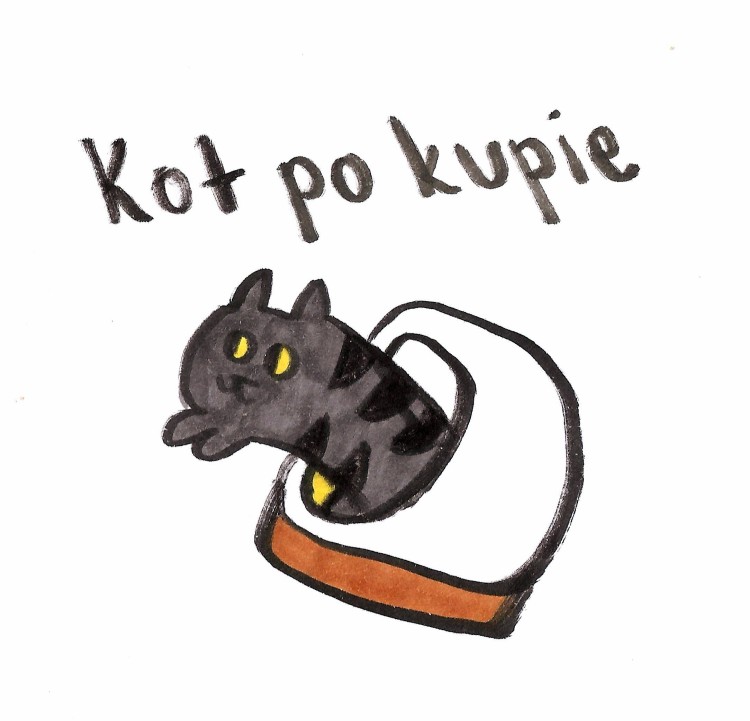
Having two cats ourselves, my wife and I have created our own Polish cat idiom. After visiting the cat litter, our cats get a sudden burst of energy or joy and sprint through the apartment at top speed. Hence our proposal for a new cat idiom:

jak kot po kupie (like a cat after a crap) – meaning to be happy and energetic

  • Jak się masz?
  • Świetnie – Jak kot po kupie.


  • How you feeling?
  • Never better. I feel like a cat after a crap.


Will it become part of the Polish language? Probably not. I’m sure there were millions of failed idioms that didn’t catch on and died. But it’s worth trying.


*Katarzyna Mosiołek-Kłosińska, Motywacja Związków Frazeologicznych Zawierających Wyrazy „Pies” i „Kot”, [w:] Etnolingwistyka, tom 7, Uniwersytet Marii Curie-Skłodowskiej, Wydział Humanistyczny, Lublin 1995, s. 21 – 31.