Quirky Polish#2 – Canaries

One of the joys of learning a foreign language is that you come across strange expressions that completely confuse you.

quirky_jpg

I was once driving behind a bus which transported shoppers to and from a out-of-town shopping centre. On the back of the bus was an advert with a bird in a cage and the text ‘no canaries inside‘. I could have overtaken the bus, it was moving a lot slower than my car, but I wanted to work out what on earth the advert meant. If you wanted to encourage people to use your bus service, then why is it an advantage that there are no canaries inside?

My mind raced, going through all the possibilities I could think of:

  • Obviously, it wasn’t literal. If there was a canary inside the bus, then it would be a selling point. No need to stress that there aren’t any.
  • Canaries came from the Canary Islands originally, hence the name. Maybe the advert was selling holidays? Nope, still made no sense.
  • Besides being pets, canaries were used in coal mines to detect poisonous gases – maybe the advert meant that there’s no danger of being intoxicated by fumes in this bus service? Hardly a selling point.
  • The most famous canary I knew was Tweety Bird from the Warner Bros cartoons. Maybe I was Sylvester the cat and I should hunt the bus to the shopping centre? No, that still didn’t fit.

I was confused…completely confused.

Later that day I asked my wife and she explained that a ‘kanar‘ is a plain clothes ticker inspector who rides buses in search of fare-dodgers.

Ah-hah, I finally understood the advert – the bus service was free so there’s no danger of getting caught by any ticket inspectors!

Like a child, I asked lots of Poles why ticket inspectors are called ‘canaries’ but they didn’t know. Someone somewhere probably had a good reason for calling a ticket inspector a ‘canary’ and it caught on. Now it’s part of the language.

And that’s the fun of learning a foreign language. You come across words and expressions that will confuse you, surprise you and amuse you. Just enjoy the ride!
Quirky Polish#1 – Saigon

The beauty of a language is that they evolve – words get attached to meanings and sometimes no one knows why. The expression sticks and every one uses it, but no one questions why it’s used.

That’s one of the joys of learning a foreign language – you come across such curious expressions for stuff.

quirky_jpg.jpg

So here is one of my favourite bizarre Polish expressions:

Saigon

To był kompletny saigon!

Poles use this expression when a situation or place is in a total mess or upheaval, a good English translation would be ‘disaster zone’.

Now there are some expressions that come with a date stamp, you know exactly in which period of history they come from.

Obviously, this expression came into being during the Vietnam War when Saigon wasn’t looking its best. So sometime during the late Sixties or early Seventies when the Vietnam War was in the news, some Poles started using the word and it caught on.

I often hear Poles in their 20’s or 30s using this expression even though they weren’t even born when the Vietnam War took place!

Jokingly I ask them why they haven’t updated the word, i.e. chosen a more freshly bombed out city to describe a messy situation. Why not Bagdad or Grozny? But then again, that probably wouldn’t be a good idea.

If you’re Vietnamese, wouldn’t you find this expression would be a little offensive? Imagine another culture that heard about the destruction of Warsaw during World War II and it became common in that language to use the word ‘Warsaw’ to describe something that is a total mess. ‘The event was a complete Warsaw‘. Not exactly good PR.

Nation of Poets#1

poets_jpg


Poles use a lot of rhyming expressions in everyday speech. The most famous is smigus dyngus – a rhyming name that sounds silly, but which actually fits well with the type of activity it describes!

I once told a friend that I like these rhyming expressions in Polish and he said:

‘What can I say? We’re a nation of poets!’

So to celebrate this nation of poets, here are some of my favourites:

Ryzyk Fizyk

This means well, it’s worth taking the chance.

It’s actually quite persuasive when someone says this. Including the word ‘fizyk/physics’ suggests that we’re not talking about ‘chance’ but the mechanical laws of the universe!

It was probably coined by Kopernik when the church were considering publishing his research!

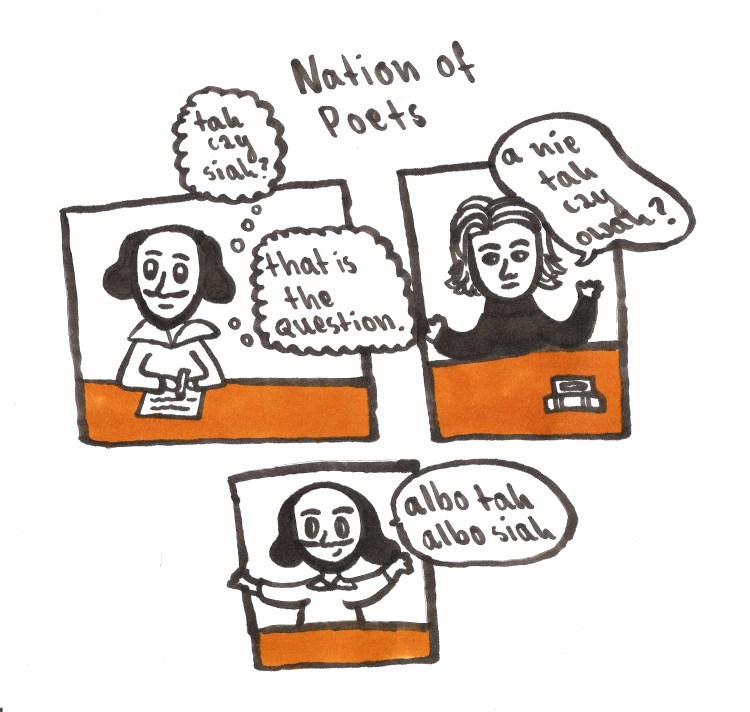
Tak Czy Siak

  • tak czy siak
  • tak czy owak
  • albo tak, albo siak

These expressions mean ‘in any case, anyway or for better or worse. The rhyming works well to express that we’re talking about something that doesn’t matter.

What is a ‘siak’ anyway? Whatever it is, it similar to an ‘owak’ and it’s always an option. If you don’t like the first option, there’s always the ‘siak’ option.

In Chinese, the word tao means ‘way’ or ‘route’ and signifies the path to spiritual enlightenment in Taoism. For a Polish equivalent, then I offer you Siakism or Siakizm. If you are in two minds, then choose the way of Siak – it might not be a well-trodden path, but hey ‘ryzyk fizyk!’

Prosto z Mostu

Literally, ‘straight from the bridge‘. When I first heard this expression, I assumed it described having ‘first hand’ information about something – as if to get the best view of what’s happening, you should go and stand on the bridge! This made sense to me because the idiom does mention a specific location.

However, I learned that it actually means ‘bluntly’ and describes a communication style that is very direct or even rude.

As locations go, I wouldn’t describe the bridge as being the most vulgar. The sewer or the gutter maybe, but the bridge?