Young kids are best at learning languages. But as adults we often forget all those techniques and strategies we used to learn our first language.
So when it came to learning Polish, I adopted some childlike strategies.
1. Name Tags
The first books that children read only contain names and pictures – cat, ball, bee etc – so that they can learn to associate words with things.
If only the real world had labels.
When I rented my first apartment in Warsaw, the first thing I did was to decorate it… using post-it notes!

I labeled everything….and I mean absolutely every object in the apartment with its Polish name: łóżko, lodówka, szafa, podłoga (that one didn’t survive long), lustro, obraz, kwiatek. The entire apartment was covered in yellow post-it notes. At the time I hadn’t heard of Złota Polska Jesień, but that’s what the apartment looked like. When I opened a window the entire flat rustled like a chestnut tree in autumn.
Incidentally, Ikea should launch a line of furniture with labels where a language learner can write the name of the item in the foreign language they are learning. I’m sure it would it be a top seller.
2. The Count
In Sesame Street (Ulica Sezamkowa) there’s a Dracula-like character called ‘the Count’. Because his purpose is to teach children numbers, he counts everything. During my first few months in Poland, I adopted his strategy.
I prepared a water-proof cheat-sheet listing polish numbers from 1 to 500. I hung it in the bathroom so I could count in Polish while going through my bathroom routine every morning.
Typical counts:
- Brushing my teeth – pięćdziesiąt
- Showering – sto czterdzieści (dziewięćdziesiąt dziewięć if I was in a hurry)
- Drying myself – trzydzieści
Most people only use this Sesame Street strategy to count the number of coffees they’ve drunk that morning. If you want to learn a foreign language, then I recommend extending it to your daily routine.
3. Copying
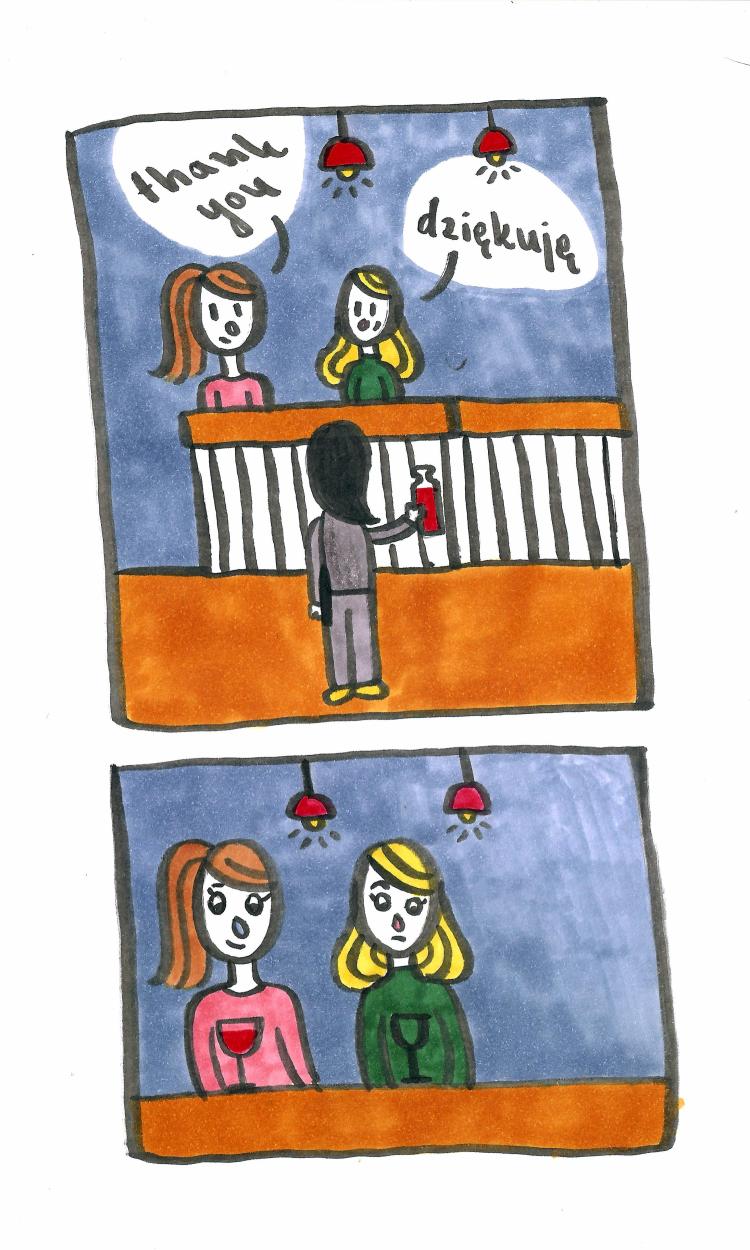
Children don’t learn their native language from textbooks with grammar exercises. They simply listen to what their parents or siblings say and copy it. I decided to adopt the same strategy. I would listen to Polish native speakers and copy what they said. Listen and copy, listen and copy.
So while traveling on the metro, I (and the rest of the children in the wagon) would repeat the names of the stations as they were announced. Or when a colleague ordered zupa pomidorowa in a restaurant, I’d order the same.
The one downside to this approach was that the person I mostly copied was my Polish girlfriend, so I ended up using the feminine form of most verbs. So instead of saying zadzwoniłem, I learned to say zadzwoniłam etc. But still, it was a step forward.
This strategy is more effective if you copy more than just the words. If you mimic the tone, the intonation and especially the emotion of the speaker, then not only is your pronunciation better, but you also start to get a feel for the language.
So when a cashier in a grocery shop asked for change, I would repeat the word ‘drobne‘ with the same world-weary tone of frustration and really feel the pain of not having enough tens, fives and ones.




 Polisher